
Domestic electrician in London for home repairs and safety
A tripped circuit is inconvenient; uncertainty about its cause can be more unsettling. A domestic electrician in London can trace electrical faults, carry out home repairs and assess whether an installation needs attention. UK landlords are legally required to have a valid Electrical Installation Condition Report every 5 years, according to the UK legislation register.
It’s reasonable to want clear answers before electrical work begins, especially when a fault affects your home or a property you rent out. This article explains how electrical repairs and fault finding are handled, what safety certificates and landlord testing involve, and what to expect when arranging work in London.
You’ll also learn how electricians approach domestic and commercial jobs, from smaller repairs to wider installation work. The sections ahead explain the factors that shape each job and help you understand when a professional assessment is the right next step.
Table of Contents
Need a Trusted Domestic Electrician in London?
A domestic electrician in London can assess consumer units, new circuits and faults before recommending work. The right scope depends on the installation, the property’s needs and electrical safety.
Consumer Unit and Fuse Board Replacements
A consumer unit, also called a fuse board, distributes electricity around the property and contains circuit protection. Replacing one can involve checking the existing installation, arranging suitable earthing and connecting the circuits to the new unit. For example, if a kitchen extension needs extra sockets, an electrician can assess whether a new circuit is appropriate.
Ask for the proposed work to specify the unit, circuits and any earthing changes. Electrical work in London should comply with Part P of the Building Regulations. A clear explanation of the installation and compliance helps you understand what the work covers.
Electrician Costs and Quotes
London electrical work may be charged by the hour or priced as a complete job. The cost depends on the scope, access, materials and labour. A single socket repair differs from replacing a consumer unit or adding a new circuit.
Before work starts, make sure the quote describes the task, included materials and any additional work that could affect the final amount. For an urgent fault, explain which circuits have stopped working and whether the issue affects the whole property. These details help define the job.
Hiring Checks, Insurance and Guarantees
Compare written quotes by their scope, not just their headline amount. Check that the electrician’s insurance covers the work at your property, and ask for any guarantee terms in writing. For a fuse board replacement, for instance, the quote should clarify whether testing and associated earthing work are included.
Look for relevant electrical qualifications and a clear explanation of the proposed work. Before accepting, ask who will carry out the installation, how changes will be communicated and what documentation you’ll receive. These checks clarify responsibilities and the expected outcome.
Rewiring and Older Properties
In an older property, an electrician assesses the existing wiring, consumer unit and circuits before recommending full or partial rewiring. The property’s layout, condition and planned use help determine the scope. A new kitchen or loft conversion may also need circuits for additional equipment.
Consumer unit upgrades and rewiring are related but distinct jobs: a new unit does not automatically replace older wiring throughout the home. A clear assessment should identify which circuits need attention and how the work will be sequenced. This gives the owner a practical understanding of the installation and its electrical safety.
Domestic electrical repairs and fault finding
Electrical faults can affect one socket, a whole circuit or an appliance. A residential electrician traces the cause before deciding which repair or electrical installation is appropriate.
Electrical Fault Finding
Fault finding starts with the symptoms: note which lights, sockets or appliances are affected and when the issue occurs. For example, a circuit that trips when a charger is used gives the electrician a useful starting point. They can inspect the relevant wiring and test the installation to narrow down the cause.
Recurring interruptions may involve a circuit, connection or appliance, so replacing a visible component alone may not resolve the fault. Explain when the problem began to help the electrician focus the assessment and describe the next step.
Electrical Repairs
Once the cause is identified, the electrician can explain the repair and its scope before carrying it out. This might involve repairing a damaged connection, replacing a faulty socket or addressing a problem with a lighting circuit. The work should address the fault, rather than treating a symptom without investigating its source.
For more involved electrical work, such as a circuit affected by several faults, the assessment may identify additional installation work. Ask for the repair and any recommended follow-up work to be explained separately. That makes it easier to understand what will be done and why.
Warning Signs of Unsafe Wiring
Report warning signs such as flickering lights, sockets that feel unusually warm, visible damage to wiring or a burning smell near an electrical fitting. Circuits that trip repeatedly are another reason to arrange an assessment. These symptoms can have different causes, so they don’t identify a fault by themselves.
Describe the affected fitting, when the symptom appears and whether it happens alongside an appliance, such as a charger. An electrician can use those details to assess the wiring and electrical safety, then explain whether a repair or further investigation is needed. Don’t assume a recurring fault is resolved just because it stops temporarily.
Electrical safety certificates and landlord testing
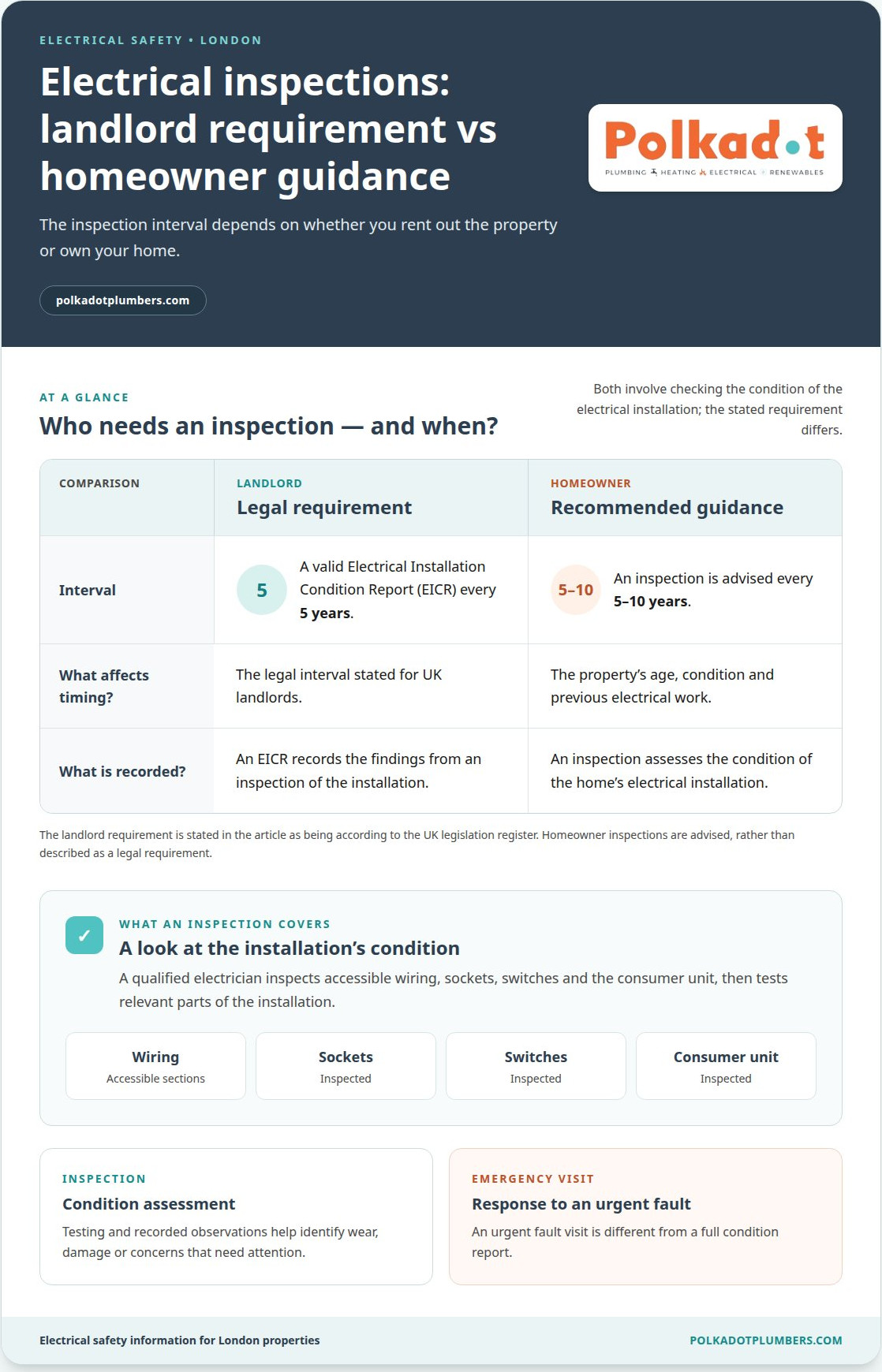
An inspection assesses the condition of a property’s electrical installation and records its findings. The right report depends on whether you’re checking existing wiring or documenting new work.
UK landlords are legally required to have a valid Electrical Installation Condition Report every 5 years, according to the UK legislation register. Homeowners are advised to arrange an inspection every 5-10 years, with the property’s age, condition and previous electrical work informing the timing.
Electrical Safety Inspections
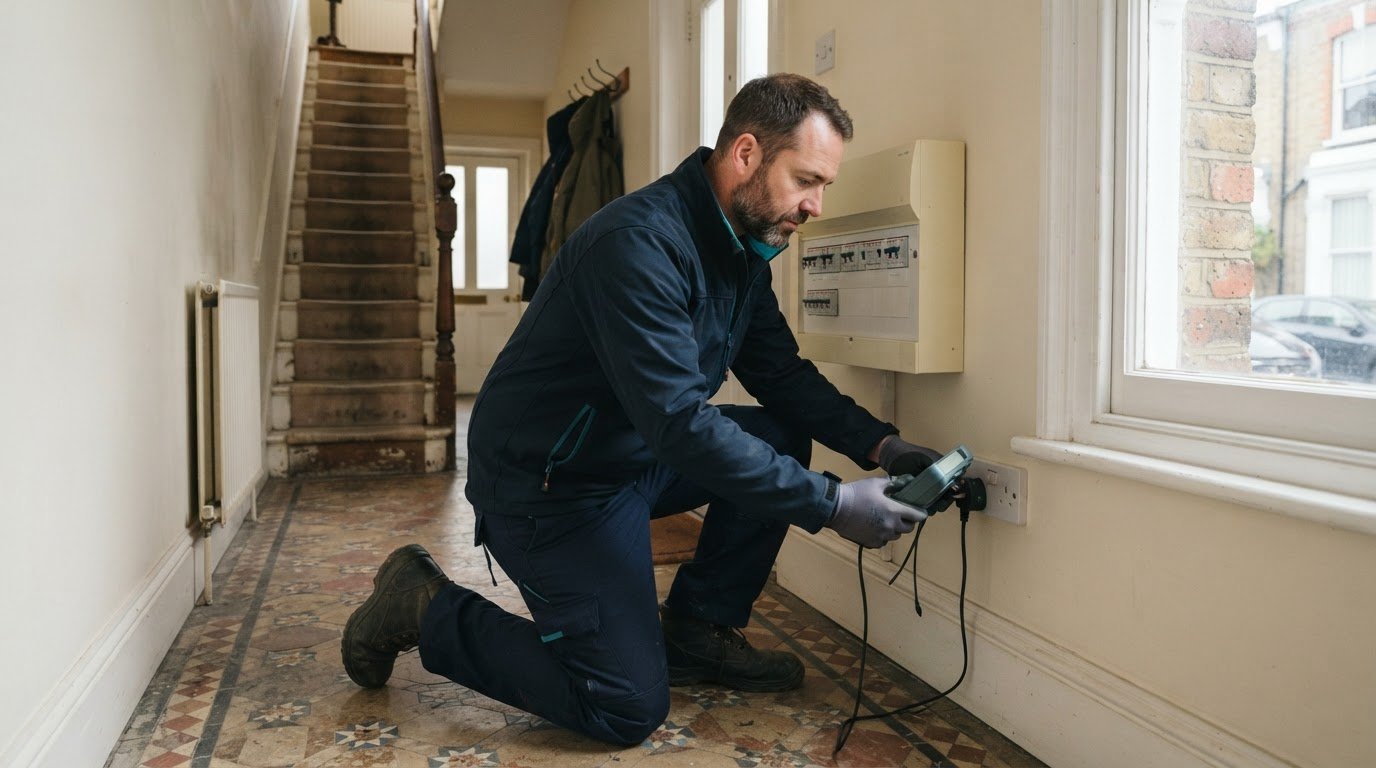
A qualified electrician inspects accessible wiring, sockets, switches and the consumer unit, then tests relevant parts of the installation. In a London flat, this can identify wear, damage or concerns that need attention. This differs from an emergency visit, which responds to an urgent fault rather than providing a full condition report.
After testing, the electrician records observations and explains any recommended work. Read the findings alongside their classifications and actions so you understand whether an issue needs attention and why. A useful inspection gives a landlord or homeowner a clear record of the electrical safety assessment.
EICRs and Installation Certificates
An Electrical Installation Condition Report, or EICR, assesses the condition of an existing installation. An electrical installation certificate records work on a new installation or an alteration. They serve different purposes: an EICR reports on existing wiring, while a certificate relates to specified completed work.
For a landlord, the EICR is the relevant recurring report under the five-year requirement. After a new circuit or other installation work, the certificate documents that work. Keep the correct record with the property’s electrical documents, and make sure the electrician explains which installation it covers.
Ask for the report or certificate after testing or installation, and have any findings explained in plain language. A qualified electrician can clarify the inspection’s scope, the work recorded and any recommended next steps. This makes the paperwork useful for managing the property, rather than simply filing a document without understanding its purpose.
Domestic and commercial electrical work
Domestic and commercial electrical work starts with how each property is used. A home extension may need additional circuits, while a shop refurbishment may involve lighting and power across several work areas. These differences shape the installation plan, access arrangements and sequence of work.
For a home, the electrician can map each proposed change to the existing installation. A kitchen renovation, for example, may add appliances and sockets, creating a need to assess circuit capacity. In a commercial unit, the plan may need to account for equipment, staff areas and business operations. Clear access and a defined scope help work proceed efficiently.
Charger installation is another case where the property and intended use matter. The electrician considers the proposed location, cable route and connection to the electrical installation. Sharing those details early helps define the work and gives the installer a clearer basis for explaining the proposed steps and any effect on existing circuits.
Regulations also shape the work. According to the UK legislation register, electrical work in London should comply with Part P of the Building Regulations. This applies to domestic electrical work, including relevant alterations and additions. A clear description of the planned work helps establish which requirements apply and what documentation is needed after completion.
Commercial projects need their own assessment, rather than a domestic plan copied across. A small office refit, for instance, differs from adding power in a retail space with display lighting. The electrician can identify equipment, work areas and access constraints before setting out the sequence. This helps reduce disruption and clarify responsibilities.
Before work begins, define the rooms or areas involved, the equipment to be connected and the intended outcome. For a home charger, identify its location and use; for a workplace, detail the affected areas. These practical details help the electrician scope the installation.
Polkadot: London Emergency Plumbing
Polkadot provides London Emergency Plumbing for urgent plumbing problems, such as a leak disrupting a home. For electrical faults, repairs and safety inspections, Polkadot’s electrical installation service can help assess the work needed. Describe the issue clearly when making an enquiry so it can be directed to the right service.
Polkadot also handles heating and air conditioning work, alongside refurbishment projects. These services may be relevant when electrical changes form part of a wider property upgrade, such as updating a room’s heating during refurbishment. Set out the rooms or systems involved and the outcome you need to put the work in context.
If you need plumbing support or are planning related property work, contact Polkadot to discuss your requirements.
Plan your next property improvement
Before arranging electrical work, decide how the property needs to function when the job is complete. Note the rooms involved, any equipment being added and whether the work forms part of a wider refurbishment. This gives a domestic electrician in London a clearer picture of your priorities and helps shape a practical scope.
For projects involving several systems, consider how electrical installations fit alongside other planned improvements. Polkadot offers Air Conditioning, Refurbishment and Heating, which may be relevant when coordinating work across a property. Connecting these requirements can help you plan the next stage clearly.
Share the work you have in mind and the outcome you want. Contact Polkadot about your electrical work to discuss a suitable next step. A clear starting point makes it easier to move from a concern or idea towards a well-planned project.
Frequently Asked Questions
What domestic electrical services do London electricians provide?
London electricians handle work ranging from fault diagnosis and socket repairs to lighting, consumer unit replacements, rewiring and new circuits. Some also install equipment such as electric vehicle chargers or carry out electrical installations during refurbishment. The right service depends on the property and the work required. Describe the affected area, symptoms or planned changes so the electrician can assess the scope.
How do I find a qualified and registered domestic electrician in London?
Look for relevant qualifications and registration with a competent person scheme, where applicable. Ask for the electrician’s registration details, then search the scheme’s own register to check the entry. A domestic electrician in London should be able to explain the work’s scope, the documents you’ll receive and any follow-up needed. This helps you understand the proposed job before it starts.
What qualifications and accreditations should a London domestic electrician have?
Look for relevant electrical training, such as NVQ Level 3 or an equivalent qualification, and ask how it relates to your planned work. Scheme registration, for example with NICEIC or NAPIT, is a separate point to check. A domestic electrician in London can explain their experience with your particular job, such as adding a circuit, and describe the records provided when it’s complete.
What electrical work in a London home requires Part P certification or Building Regulations approval?
Electrical work in London should comply with Part P of the Building Regulations, according to the UK legislation register. Requirements depend on the work’s scope, so discuss a new circuit, alteration or larger installation with the electrician before work begins. Ask which compliance steps and completion documents apply to your project, rather than assuming every repair follows the same process.
How can I check whether a London electrician is registered with NICEIC, NAPIT or another competent person scheme?
Use the relevant scheme’s member search and enter the electrician’s or business’s details. Check that the register entry matches the person or company arranging your work, rather than relying only on a logo or verbal claim. If the entry uses a different business name, clarify how it relates to the electrician. Keep the registration details with your project paperwork.
Comments