
How to Clear a Drain Line When Your AC Leaks Water
A leak from an indoor air conditioner often points to a drainage problem. An air conditioning unit leaking water may need a straightforward fix: switch it off, let water drain, then clear an accessible blocked condensate line. If water is near electrical components, stay clear and arrange professional help rather than attempting a repair.
Water appearing indoors can be worrying. A blocked drain is one possible cause, but dirty filters, a damaged drain pan or ice forming on the coil can also lead to leaks. Water dripping from the outdoor unit, by contrast, can be normal, particularly in humid conditions.
Read on to learn how to clear an accessible condensate line safely, why filter care matters and which signs call for professional attention. You’ll also find practical maintenance steps to help reduce the chance of another leak.
Table of Contents
Cleaning a condensate line with vinegar or a wet/dry vacuum
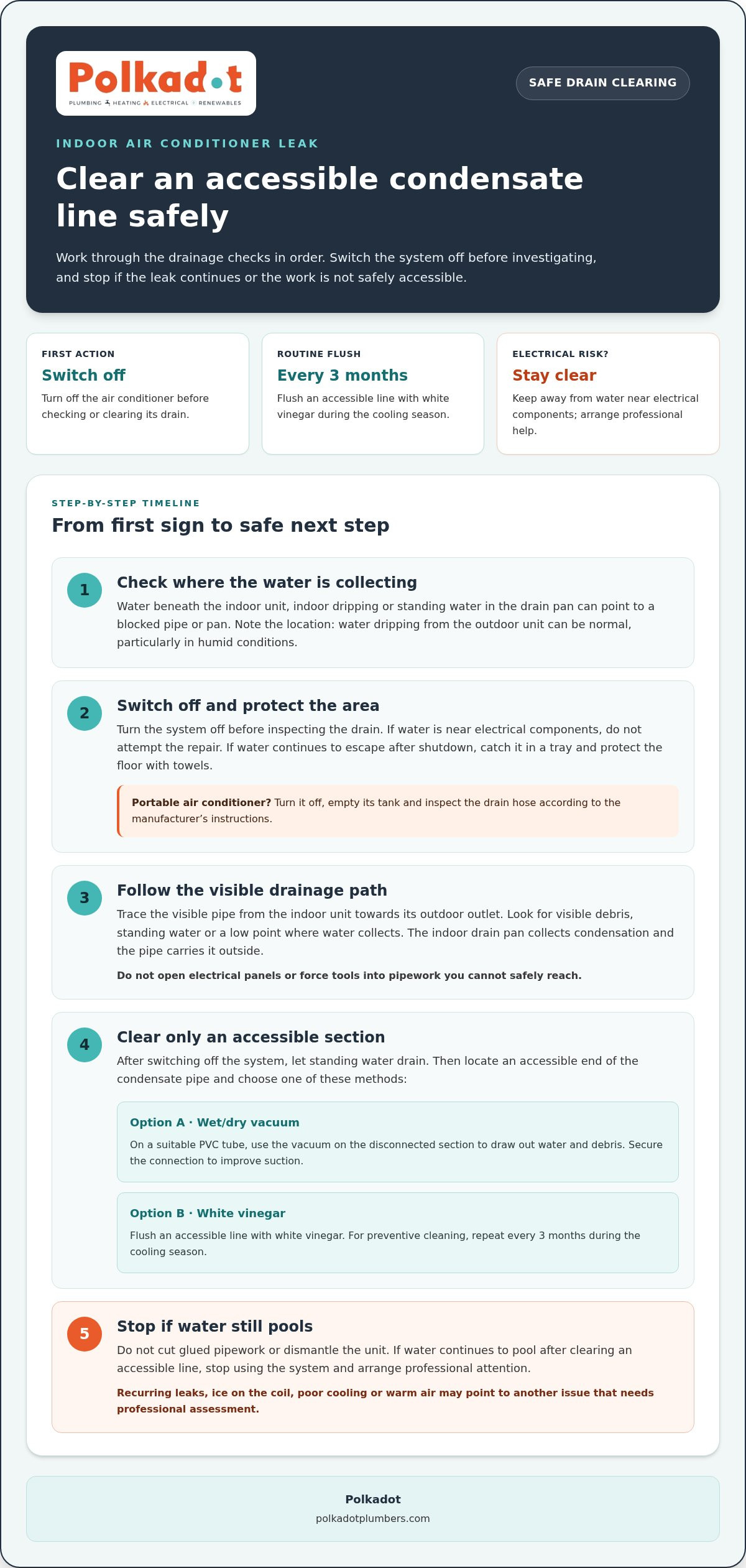
A practical air conditioning unit leaking water fix starts with identifying whether indoor water is pooling around the unit. Switch off the system before clearing its drain, especially if water is near electrical components.
If a portable air conditioner leaks, turn it off, empty its tank and inspect the drain hose according to the manufacturer’s instructions. If water continues to escape after shutdown, catch it in a tray and protect the floor with towels.
Recognise a blocked condensate drainCheck for water beneath the indoor unit, indoor dripping or standing water in the drain pan. These signs can mean a clogged pipe or pan is preventing condensation from draining outside. Wall-mounted air conditioners can leak for the same reason. Water dripping from the outdoor unit can be normal, particularly in humid conditions, so note where it collects.
Follow the condensate drainage pathFollow the visible pipe from the indoor unit towards its outdoor outlet, but don’t open electrical panels. The system collects condensation in an indoor drain pan and carries it outside through a drain pipe. Look for visible debris, standing water or a low point where water collects, as these may obstruct drainage. Don’t force tools into pipework you can’t safely reach.
Clear the condensate lineLet standing water drain after switching off the system, then locate an accessible end of the condensate pipe. On a suitable PVC tube, use a wet/dry vacuum on the disconnected section to draw out water and debris; secure the connection to improve suction. Alternatively, flush an accessible line with white vinegar. A useful air conditioning unit leaking water fix is preventive cleaning: flush with vinegar every 3 months during the cooling season. Don’t cut glued pipework or dismantle the unit. If water still pools, stop using the system and arrange professional attention.
Why Do Air Conditioners Leak Water ?
Check where water appears and how the air conditioning system performs; several common causes can produce similar symptoms. UK repair costs depend on the cause, parts and work required; the price is provided after a quote request.
Identify common leak causesInspect the area around the indoor unit and note whether water is escaping from the casing, pipework or drain pan. Possible causes include a blocked drain line, damaged pipe, cracked or corroded tray, faulty fan assembly, poor installation or an isolated pump. If the indoor unit isn’t level, water may also escape instead of draining properly. Avoid removing covers or touching wet electrical parts.
Distinguish indoor and outdoor leaksCheck whether water is pooling inside or dripping beneath the outdoor unit. Indoor pooling can mean condensate isn’t draining correctly or that a pan or pipe is damaged. Outdoor-unit dripping, by contrast, can be normal, particularly in humid conditions. If a switched-off evaporative cooler continues leaking, a faulty solenoid valve or a water line that isn’t shutting off properly may be responsible.
Consider low refrigerantNote whether the unit is icing up, cooling poorly, blowing warm air, or making hissing or bubbling noises. These signs may indicate low refrigerant; when ice melts, the resulting water can exceed what the drain system handles. A refrigerant leak may be the underlying cause, so don’t try to recharge or open the system yourself. In the UK, refrigerant leaks require specialist equipment and F-gas certification. Arrange an engineer’s assessment, and use air conditioning support for a persistent leak.
Dirty or damaged filters can contribute to water leaks. A damaged or deteriorated condensate drain pipe may also let water escape before it reaches the outside. Ice inside the unit can melt into more water than the drain is designed to handle, causing a leak. These clues may help distinguish a drainage issue from a problem with the system’s refrigerant.
Ice formation, poor cooling, warm air, or hissing or bubbling noises may indicate low refrigerant. Have an engineer investigate suspected low refrigerant, as this could point to a refrigerant leak.
Dirty filters restricting airflow and causing coil ice
Inspect the filter before assuming a clogged drain is the cause of dripping. A dirty filter can restrict airflow, contribute to ice forming on the coil and eventually lead to excess water.
Inspect air filters for dirt or damageSwitch off the air conditioning system, then inspect the filter according to the manufacturer’s instructions. Dust and dirt can restrict airflow across the evaporator coil and affect system operation. Look for a visibly clogged, damaged or poorly seated filter, and replace it with the correct type. Even a filter that looks clean may fail to trap debris if it is torn, allowing dust to build up inside the unit.
Address frozen coilsIf you see ice on the evaporator coil, turn off the cooling function and don’t scrape or chip the ice. Restricted airflow from a dirty filter can contribute to freezing. As the ice melts, excess water may overwhelm normal drainage and leak indoors. Leave a frozen coil to professionals, as damaging it during defrosting can lead to costly repairs. Keep clear of wet electrical components.
Maintain filters and schedule servicingCheck filters regularly, especially during heavy use, and replace them every 1-3 months during heavy use. Preventive maintenance includes checking and cleaning filters to remove accumulated dirt and dust. Note when you clean or replace each filter, then inspect it again if airflow weakens or water appears. This simple routine helps limit a common restriction, but ongoing ice or leaking after filter care needs further attention.
After fitting a clean filter, restart the system only when the coil is ice-free and the area is dry. If the unit continues dripping or repeatedly freezes, stop using it and arrange a professional assessment instead of attempting an internal repair.
AC leak prevention and professional maintenance
Before the next cooling period, check the drainage path, filter and visible signs of water damage to help prevent a repeat problem. For an air conditioning unit leaking water, focus on the underlying cause rather than repeatedly dealing with the symptoms.
During humid periods, check the condensate drain pan for standing water each month. Water left in the pan can signal poor drainage or a blocked line. As part of routine maintenance, have the drain checked and clogs cleared. Sterilise the pan if significant mould is present, and replace drain pipework if inspection shows damage or deterioration.
Keep the air filter clean and observe whether the system drains properly during cooling. A safety float switch may turn the air conditioner off if excess water collects in the pan. It can limit overflow, but it won’t clear the blockage. Repeated shutdowns or fresh pooling are reasons to investigate the drainage system.
Look for water-soaked insulation, swollen skirting boards or ceiling stains near the unit. These signs suggest water may be affecting the building, so arrange professional attention promptly. Stop using the system if water reaches electrical components. Don’t touch wet wiring, sockets or appliances unless they have been safely isolated.
Arrange a qualified assessment if basic cleaning hasn’t stopped repeated leaks, or if you notice corrosion, electrical issues, unusual noises, smells or reduced cooling. Leaks from ceiling-mounted and ducted systems also need professional attention. A faulty condensate pump may need repair if it moves water to a higher-level drain. DIY repairs risk electrocution and may invalidate a system warranty.
For an air conditioning unit leaking water, a fix may require professional diagnosis of the drain, pump or another system fault. For persistent leaks that need assessment or repair, arrange air conditioning support.
Contact a qualified air-conditioning professional promptly about repeated leaks or warning signs. Have repairs carried out professionally, as leaks can cause costly damage to a building or its contents.
Polkadot: Air Conditioning
Polkadot Plumbers provides air conditioning installation, maintenance and repair for London households dealing with persistent leaks, drainage faults or cooling problems. If cleaning the condensate line and checking the filter haven’t stopped the leak, a professional assessment can help identify whether the cause is in the drain, pump, pipework or another system component. Avoid dismantling the unit or attempting electrical repairs, particularly if water is near wiring or controls.
Polkadot can help with air-conditioning issues that call for a closer look and suitable repair. Share where the water appears, whether the system still cools properly, and what checks you’ve already completed. These details help explain the fault and guide the next steps.
Contact Polkadot to discuss your air-conditioning leak.
Take the next step towards a dependable system
A recurring leak is a reason to look beyond the water itself. The right air conditioning unit leaking water fix addresses the fault behind it, helping you make a considered decision about repair and ongoing care instead of repeatedly managing the symptoms.
For a problem that persists or returns, bring in professional support and explain what you’ve observed. Polkadot offers Air Conditioning, alongside Refurbishment and Heating for wider home-comfort needs. A clear description of the leak and its effect on the system gives the conversation a practical starting point.
Contact Polkadot for AC help and take the next step towards resolving the issue.
Frequently Asked Questions
DO I NEED TO HAVE A LEAKY AIR CONDITIONING UNIT REPAIRED?
Yes, arrange an assessment if water is escaping indoors or the leak keeps returning. Even a slow drip can damage plaster, flooring or stored belongings over time. If you notice swollen skirting boards, water-soaked insulation or ceiling staining, stop using the unit and seek professional attention promptly. Dripping outside in humid weather can be normal, so note where the water appears.
What if the drain pipe is glued?
Don’t pull or twist glued PVC pipework, as it can crack and create a larger leak. If you can’t reach the blockage through an accessible opening, the repair may require cutting and reconnecting a straight pipe section. The pipe’s position and connection type matter. A technician can inspect the route and restore a secure joint without unnecessarily disturbing nearby components.
Why is my central AC leaking water?
Water beneath a central system’s air handler often points to a drain pan or condensate drainage fault. A blocked line can make water collect in the pan, and a float switch may shut the system off as the level rises. A faulty condensate pump is another possibility if the system sends water to a higher-level drain. Note any shutdowns or unusual pump noises.
Why is my air conditioning unit leaking water indoors?
Indoor leaks commonly mean water isn’t reaching the outdoor drain outlet. A wall-mounted unit may leak if its drain pan or pipe is blocked, the unit isn’t level, or water escapes behind a poor seal. Check whether the wall feels damp or the paint is bubbling, and stop the unit if water approaches sockets, switches or other electrical equipment.

Comments