
How to find and fix low water pressure in your house
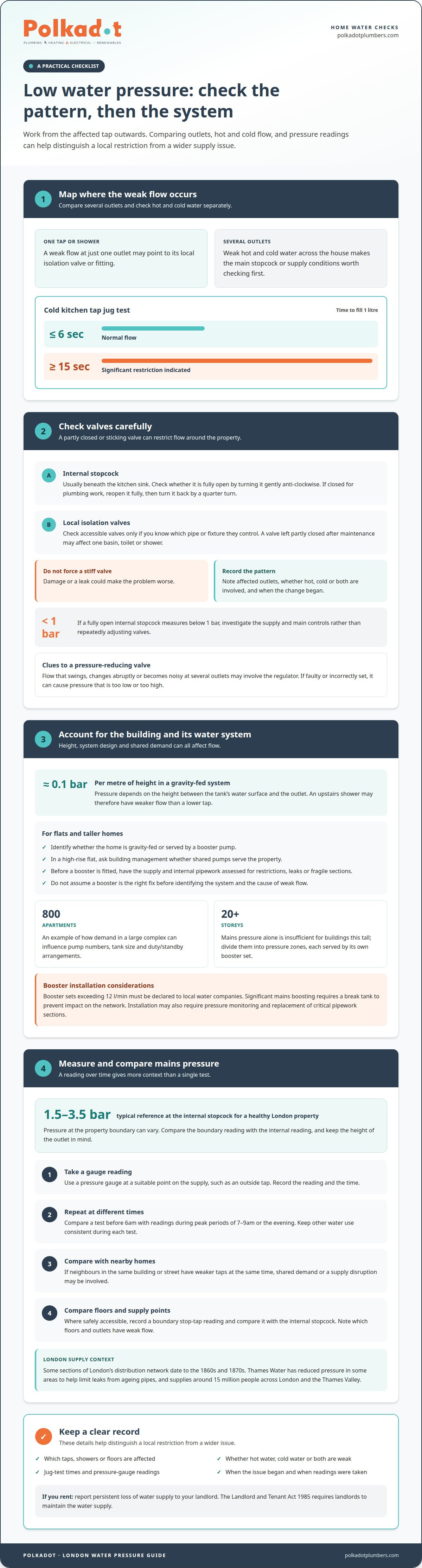
A weak tap doesn’t automatically mean London’s mains are at fault. To fix low water pressure in a house in London, first check whether the problem affects one outlet or several, and compare hot and cold flow. A cold kitchen tap that fills a one-litre jug in six seconds or less has normal flow; taking 15 seconds or more points to a significant restriction.
If water pressure has dropped, it’s understandable to suspect a faulty valve or a supply problem. The cause may be closer to home: a partly closed stop valve or blocked tap can restrict flow, while a wider drop across the property may point to internal pipework or the mains supply.
This guide shows you how to check flow, inspect the stop valve safely and work out whether the issue is isolated or affects the whole house. You’ll also learn which signs call for a closer plumbing assessment, so you can move from guesswork to a clear next step.
Table of Contents
Are pressure reducing valve problems common?
Compare the affected outlets before adjusting anything. If one tap or shower has weak flow, its local isolation valve or fitting may be responsible. If hot and cold water are both weak throughout the house, check the main stopcock and supply conditions first. A sudden change at several outlets is less likely to be caused by one faulty tap.
Find the internal stopcock, usually beneath the kitchen sink. Check whether it is fully open by gently turning it anti-clockwise. If you close it for plumbing work, reopen it fully, then turn it back by a quarter turn. A partly closed or sticking stopcock can restrict flow throughout the property and make it fluctuate.
Check accessible isolation valves only if you know which pipe or fixture they control. A valve left partly closed after maintenance can affect one basin, toilet or shower. Don’t force a stiff valve, as damage or a leak could make the problem worse. Note which outlets are affected and whether the change involves hot water, cold water or both.
Consider a pressure-reducing valve if flow swings, changes abruptly or becomes noisy at several outlets. This regulator controls pressure entering the home; if faulty or incorrectly set, it can cause pressure that is too low or too high. If a fully open internal stopcock measures below 1 bar, investigate the supply and main controls rather than repeatedly adjusting valves. A Victorian property with later plumbing alterations may also have several separate controls, so note their locations for assessment.
If you rent, report persistent loss of water supply to your landlord. UK legislation, the Landlord and Tenant Act 1985, requires landlords to maintain the water supply. Share the affected taps, whether hot or cold flow is involved, and when the fault began. That record helps distinguish a local isolation valve from a wider pressure-regulator or supply issue.
Why do I have low water pressure in the house?
Building height, system design and shared demand can all affect flow. Identify the water system before considering a booster pump.
Identify the building’s water systemCheck whether your home is gravity-fed or supplied by a booster pump. In a gravity-fed system, pressure depends on the height between the tank’s water surface and the outlet: it is approximately 0.1 bar per metre. An upstairs shower may therefore have weaker flow than a lower tap. In a high-rise flat, ask building management whether shared pumps serve the property. Don’t assume a booster is the right fix before identifying the system.
Assess pipework before booster installationHave the supply pipe and internal pipework assessed before fitting a booster. Restrictions, leaks or fragile sections can affect how safely the system handles increased pressure. A booster may also need pressure monitoring and could involve replacing critical sections of pipework. Check that the stopcock is fully open, then note which floors and outlets have weak flow. These details can help distinguish a building-wide supply issue from a local restriction.
Match any proposed booster capacity to the building’s demand. A system serving one home has different needs from one serving multiple flats; an 800-apartment complex illustrates how flow demand can influence pump numbers, tank size and duty/standby arrangements. For taller buildings, divide the property into pressure zones, with each zone served by its own booster set. Mains pressure alone is insufficient for buildings 20 storeys or higher.
Plan installation, notification and commissioning as part of the same assessment. Water booster sets exceeding 12 l/min must be declared to local water companies. Significant mains boosting requires a break tank to prevent impact on the network. Once installed, test the system across its intended outlets and pressure zones, including showers on upper floors. If pressure remains unstable, a professional plumbing assessment can help identify whether the cause is the booster, supply or pipework.
Ageing water infrastructure and low mains pressure in London
A healthy London property typically has 1.5-3.5 bar at its internal stopcock. Compare readings at different times and floors to separate mains pressure changes from plumbing restrictions.
Measure the mains pressureUse a water pressure gauge at a suitable point on the supply, such as an outside tap. Record the reading and time, then repeat before 6am and during peak periods of 7-9am or the evening. Keep other water use consistent during each test. A difference between readings can reveal changing supply pressure; a single reading cannot show how pressure behaves throughout the day.
Check for shared mains pressure dropsCompare your results with neighbours in the same building or street. If their taps weaken at the same time, shared demand or a supply disruption may be involved. London’s distribution network includes sections dating to the 1860s and 1870s, and Thames Water has reduced pressure in some areas to help limit leaks from ageing pipes. Note whether the issue affects several homes, not just different floors in yours.
Compare pressure with the home’s needsUse 1.5-3.5 bar at the internal stopcock as a typical reference for a healthy London property. Pressure at a property boundary can vary, so compare the reading with the home’s internal reading. Pressure also falls with height: allow approximately 0.1 bar per metre in a gravity-fed system. A low reading upstairs may therefore have a different cause from weak flow at ground-floor taps.
Record the gauge reading at the boundary stop tap, if it can be accessed safely, and compare it with the internal reading. Thames Water supplies around 15 million people across London and the Thames Valley, so supply conditions can vary across its network. A stronger boundary reading but weaker internal reading points towards the home’s supply pipe or plumbing system. Don’t assume a booster is the answer before locating the pressure loss.
Checking water pressure with a coin test or pressure gauge
Ofwat’s minimum standard at a property boundary is 0.7 bar. Report a shared or persistent mains problem to Thames Water. To work towards a low water pressure fix in a London house, compare several outlets, hot and cold flow, and pressure readings.
Test the cold kitchen tap first. Fill a one-litre jug and time it: six seconds or less is described as normal flow in a London home, while 15 seconds or more indicates a significant restriction. Repeat at another tap. If the kitchen tap flows well but other outlets do not, the cause is more likely inside the property.
Try the rough coin test at a tap with a steady stream. Place a 1p coin where the water lands; adequate flow should knock it over within 10 seconds. This is a quick comparison, not a pressure measurement. For a reading in bar, connect a pressure gauge to a suitable tap, then record the result and whether other outlets or appliances are running.
Check whether nearby homes have the same water supply problem. Ask a neighbour whether their cold taps weakened at the same time. If several properties are affected, report the issue to Thames Water, giving the location and when it began. If only your home is affected, note which taps, floors and hot or cold outlets have weak flow.
Look for signs of a leak before assuming the mains are responsible. Check visible pipework and areas around appliances for damp, stains or mould. To check the meter, close all taps and avoid using water for at least an hour, then compare the readings. A change may indicate unexplained water use or a leak that needs inspection. Don’t disturb pipes hidden inside walls.
Diagnosing low water pressure in a London home can be difficult when readings remain unclear. If weak flow persists after these checks, arrange a plumbing inspection to help identify the cause.
Polkadot: London Emergency Plumbing
Polkadot can help if weak flow persists, pressure keeps fluctuating or a plumbing fault needs attention. Its London Emergency Plumbing service addresses plumbing issues affecting your home’s water supply. Share which taps and showers are affected, whether the problem involves hot or cold water, and any readings or changes you’ve recorded. These details can help narrow down whether the issue lies within the property’s plumbing or needs further investigation. If you’ve found signs of a leak or the pressure remains unstable, contact Polkadot to discuss the problem and next steps.
Take the next step towards steady water flow
Before making further adjustments, note what changed and when. Record which rooms are affected, whether the problem returns and any plumbing work carried out recently. This gives the next inspection a useful starting point and helps avoid repeated valve changes that could make the cause harder to trace.
For a low-water-pressure fix in a London home, seek further assessment if the flow remains unreliable, the cause is unclear or you’ve noticed signs of a leak. A clear account of what you’ve tried can help focus attention on the relevant part of the plumbing system, whether the issue affects one room, a shared building or the property’s supply.
Contact Polkadot about your water pressure to discuss a practical next step. With a clear record of the symptoms, you can move forward with greater confidence.
Frequently Asked Questions
Can a hidden leak reduce pressure without obvious flooding?
Yes. A concealed leak can reduce pressure before water becomes visible, particularly if it affects a branch or main pipe run. Look for new damp patches, water staining, mould or the sound of water moving while taps are off. A meter showing unexplained water use can provide another clue. Note whether symptoms appear in one room or across several outlets.
Can blocked pipes cause sudden pressure loss?
Yes. Debris or mineral deposits inside a pipe can narrow the passage and reduce flow, and symptoms may worsen as the restriction builds. If the change seems sudden, compare several taps and check hot and cold water separately. Weak flow at one outlet suggests a local restriction, while similar changes across the property point to a wider plumbing or supply issue. Avoid dismantling pipework yourself.
Low Pressure Diagnosed: Need a Plumber?
If pressure remains low after basic checks, a plumber can investigate the household plumbing and identify whether the fault is local or affects the wider system. Polkadot provides London Emergency Plumbing for plumbing issues in London. Share your readings, the affected outlets and whether hot water, cold water or both are involved. This gives the assessment a clearer starting point than a general report of weak flow.
Should I adjust valves repeatedly to test pressure?
No. Repeated, random adjustments can make the cause harder to diagnose, especially if several controls are changed before you retest the flow. Make one careful check, note the valve’s starting position and record which outlets change. Don’t force a stiff or damaged-looking valve. If pressure remains unstable after a clear check, stop adjusting it and arrange a structured plumbing assessment.
Stopcock and Isolation Valves Checked, Still Low?
If the stopcock is fully open and pressure remains low, the cause may lie elsewhere in the supply or plumbing system. Note whether the weakness affects hot water only, cold water only or both, and whether it appears at every outlet. These details can direct the next inspection towards a hot-water restriction, internal pipework or the incoming supply, rather than further valve adjustments.
When should you call a plumber?
Call a plumber for recurring whole-house pressure loss, persistently unstable flow or suspected hidden leakage. Water staining, mould, unexplained damp or the sound of water running while taps are off warrant prompt attention, as an unseen leak can damage the property. If neighbouring homes have the same problem, report the shared supply issue to Thames Water as well. Give the plumber a concise record of timings and affected fixtures.
Comments