
Solar battery storage installation in London for your home
Solar power does not have to be used as soon as it is generated. A solar battery stores surplus electricity from your panels so you can use more of your own energy later in the day. Solar battery storage installation in London can reduce how much electricity your home draws from the grid, depending on your household’s use and how much your panels generate.
Choosing a battery size is a practical concern, not a one-size-fits-all decision. Most UK homes use solar batteries between 5 kWh and 15 kWh, with the right capacity shaped by your electricity use, solar generation and energy habits.
This guide explains how a battery works, what to expect from a professional UK installation, and what affects capacity. It also covers London-specific considerations, including roof access and the types of homes involved, so you can understand how local installation coverage fits your property and what to consider before taking the next step.
Table of Contents
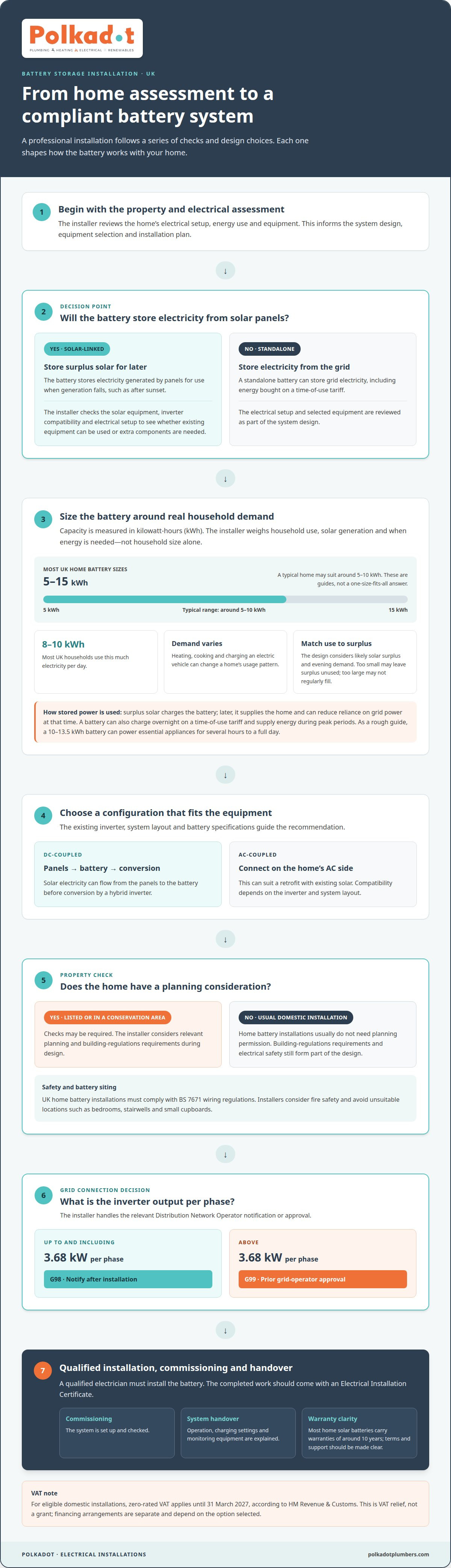
How Professionals Install Battery Storage in the UK
Installation starts with a property and electrical assessment, followed by system design, equipment selection and commissioning. The process differs depending on whether you are installing solar panels at the same time or adding a battery to an existing solar system.
Standalone and Solar-Linked Battery Systems
A solar-linked battery stores surplus electricity generated by panels for later use, such as after sunset. A standalone battery can store electricity from the grid, including energy bought on a time-of-use tariff. During the assessment, the installer reviews the existing solar equipment, inverter compatibility and the home’s electrical setup. This helps determine whether the design can use current equipment or needs additional components.
Battery Capacity and System Sizing
Capacity, measured in kWh, describes how much energy a battery can store. The system is sized according to household electricity use, solar generation and when energy is typically needed. A battery that is too small may leave surplus solar unused; one that is too large may not regularly fill. The design also accounts for inverter output and how the equipment will work together.
For eligible domestic installations, zero-rated VAT applies until 31 March 2027, according to HM Revenue & Customs. This is VAT relief, not a grant; financing arrangements are separate and depend on the option selected.
AC- and DC-Coupled Configurations
With a DC-coupled system, solar electricity can flow from panels to the battery before conversion by a hybrid inverter. An AC-coupled battery connects on the home’s alternating-current side, which can suit a retrofit with existing solar. The installer considers the existing inverter, system layout and battery specifications before recommending a configuration. These details affect compatibility and how energy moves between the panels, battery and home.
Planning and Building Requirements
Home battery installations usually do not need planning permission, but listed buildings and conservation areas may require checks. Building-regulations requirements and electrical safety are considered during project design. UK home battery installations must comply with BS 7671 wiring regulations, according to the British Standards Institution. Battery siting also matters: installers consider fire safety and avoid unsuitable locations such as bedrooms, stairwells and small cupboards.
The installer also handles grid notification or approval requirements. Systems with inverter output up to 3.68 kW per phase use G98 notification after installation; larger systems above 3.68 kW require prior grid-operator approval under G99.
How a Professional Installer Chooses Battery Capacity for Household Electricity Use
Battery capacity is measured in kilowatt-hours (kWh), but the largest unit isn’t automatically the right fit. A professional considers household electricity use, solar generation and when power is needed. Most UK homes use batteries between 5 kWh and 15 kWh, while a typical home may suit around 5-10 kWh. These ranges guide assessment, not a one-size-fits-all selection.
The installer looks at electricity bills or usage records to understand demand across the day and year. Most UK households use between 8 and 10 kWh per day, but heating, cooking and charging an electric vehicle can change a home’s pattern. The solar system’s expected generation matters too: a battery needs enough surplus electricity to charge. The installer matches usable capacity to likely surplus and evening demand, rather than sizing it from household size alone.
How does stored power work? Solar electricity charges the battery when generation exceeds immediate use. Later, the battery supplies electricity to the home, reducing reliance on grid power at that time. It can also charge overnight on a time-of-use tariff and supply energy during peak periods. A 10-13.5 kWh battery can, as a rough guide, power essential appliances for several hours to a full day.
Safety and handover are part of the installation, not optional extras. A qualified electrician must install the battery, and the completed work should come with an Electrical Installation Certificate. The installer explains system operation, charging settings and any monitoring equipment. Most home solar batteries carry warranties of around 10 years, so the handover should make the warranty terms and support process clear.
For the grid connection, the installer handles the relevant Distribution Network Operator notification or approval. Systems with total inverter output up to 3.68 kW per phase use G98 notification after installation; larger systems above 3.68 kW require prior approval under G99. The inverter output, battery configuration and household demand inform the final design and its approval route.
What Is a Solar Battery?
A solar battery stores electricity generated by panels for use when generation falls, such as in the evening. A quote should relate that purpose to the proposed battery capacity, equipment and installation scope. Estimates usually distinguish a new solar system from a battery added to existing solar, because the inverter and electrical layout affect the work involved.
A useful quote sets out the battery model and capacity, inverter arrangement, mounting location and electrical work. It should also explain commissioning and what the handover covers. If solar panels are included, the design should show how generation, household use and potential export fit together. Manufacturer warranty terms should be listed separately from the installation work so you can see what each covers.
To prepare for a quote, provide the property postcode, recent electricity usage, existing solar system model numbers and photographs. These details help assess the home, existing equipment and likely battery position. The installer can then plan a suitable system and identify whether the project involves a retrofit or new panel installation. Clear information makes the proposed scope easier to understand.
The price depends on the property and system design, and is provided after a quote request; factors include battery capacity, inverter compatibility, mounting requirements and the electrical work involved. Ask for the written scope to distinguish included equipment and installation tasks from optional additions. For example, a retrofit quote should make clear how the battery connects to existing solar and whether any inverter changes are included.
Export arrangements can also affect system configuration. Under the Smart Export Guarantee, households may receive payments for eligible electricity exported to the grid, subject to the applicable arrangement. A quote can explain the system’s export capability alongside its storage role, helping you understand how stored electricity serves evening demand and how surplus energy may be treated.
London solar and battery installation coverage
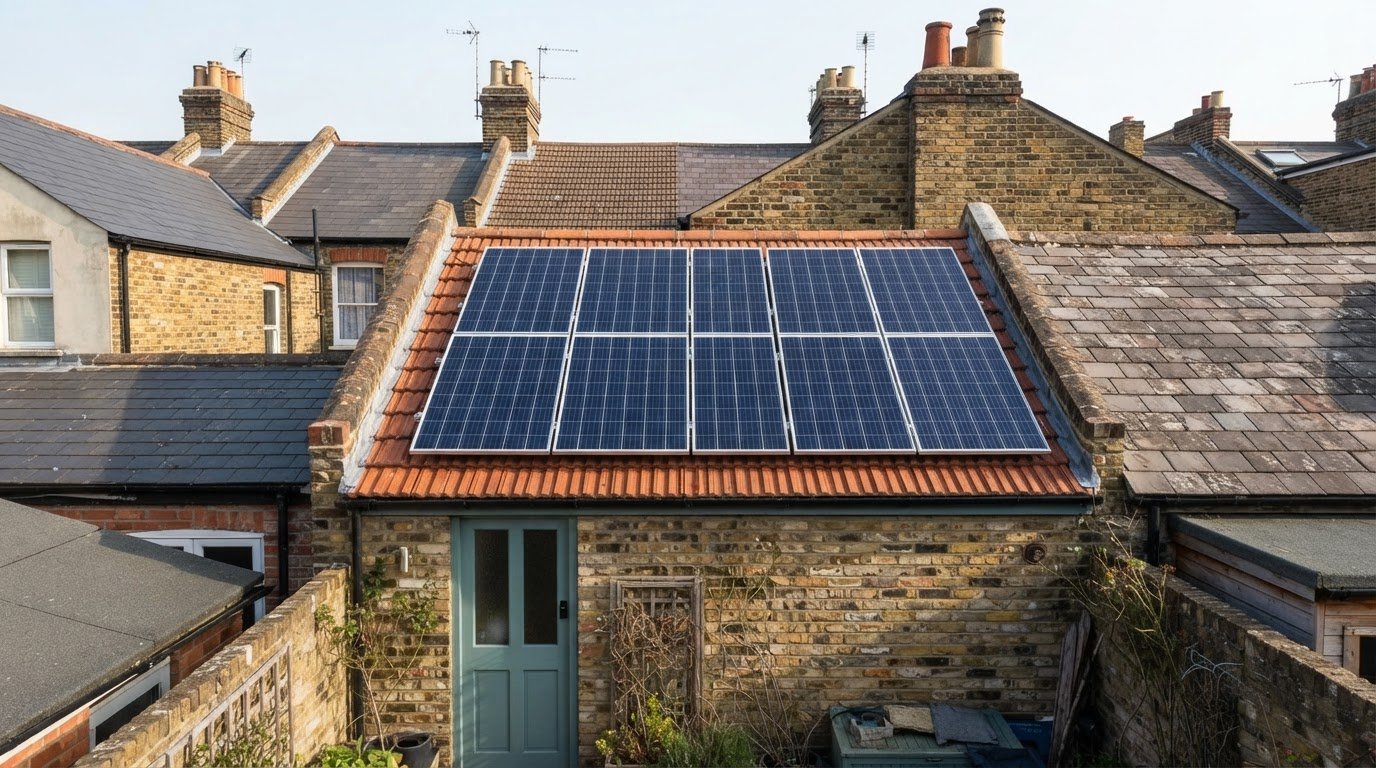
Solar and battery work in London needs to account for varied property layouts, not just panel output. The capital has many flats, smaller roofs and properties with difficult roof access, which can make solar PV installation more complex. A suitable design depends on the roof, available mounting space, existing electrical equipment and the network connection.
Which installers serve London, and how can you compare them? Look for installers covering your part of the capital, then compare the proposed system design, written installation scope, relevant credentials and warranty information. MCS certification is one credential to look for in solar installation claims. Reviews can add context: consider whether they describe similar home projects and explain the installation and handover clearly.
Property type affects the options. A flat may have limited roof access or shared building arrangements, while a house may allow more straightforward panel mounting. Listed buildings and conservation areas can require planning checks. These details affect whether the design focuses on solar panels, a battery retrofit or a combined renewable energy system.
Consider how the system will serve your home as well as generate renewable electricity. A battery can store surplus solar power for later use, while EV charging can change when household electricity is needed. Standard home batteries switch off during a power cut unless backup equipment is installed, so address backup needs in the system design. Export arrangements and the connection to the local network also shape how the system operates.
London coverage should mean a provider can plan for the specific property, not simply the postcode. The key takeaway is to match the system design to roof access, building constraints, electricity use and any backup needs. For a London assessment of your solar and battery requirements, discuss your installation needs.
Polkadot: Electrical Installations
Polkadot provides electrical installations for homeowners planning electrical work as part of a property project. If your solar battery plans involve changes to your home’s electrical setup, Polkadot can discuss the installation work and how it fits into the wider project.
Clear project details help make the conversation useful. Share whether the property already has solar panels, whether you are considering a battery retrofit or a new system, and what electrical work is planned. If the project also involves refurbishment or air conditioning, Polkadot can discuss those services alongside the property work.
A battery system’s technical design, equipment compatibility and electrical requirements need attention from the relevant professionals. Polkadot’s electrical installation services provide a practical starting point for discussing your home’s electrical project. Contact Polkadot to talk through your requirements.
Make your home energy plans the next step
A battery project works best when it suits how you use your home, not just the equipment on the roof. Before moving ahead, consider how future changes, such as an electric vehicle or updated heating, could affect your energy needs. Planning for those changes can help keep solar battery storage installation in London aligned with your longer-term home plans.
Polkadot can discuss the electrical installation involved and how it relates to wider property work. Its services also include heating, air conditioning and refurbishment, which may be relevant if your energy plans coincide with other improvements. Start with a clear conversation about your property, existing solar equipment and what you want the system to do.
Contact Polkadot about battery storage to discuss your project and the electrical work it may involve. A considered next step can make your options clearer and help you move forward at a pace that suits your home.
Frequently Asked Questions
How is aftercare arranged?
Aftercare should be explained during handover, including who to contact about system operation or a fault. Keep the commissioning documents, battery model details and warranty information together so they are easy to find. If an issue arises, note any display message and when it occurred before reporting it. This gives the installer or manufacturer useful context for assessing the problem.
How long does it take?
A new solar and battery installation usually takes one to two days, depending on the roof. Most single-battery retrofits take one day. Access, the existing electrical setup and whether panels are being installed at the same time affect the schedule. For example, adding a battery to existing solar avoids the panel installation stage, but still requires electrical work and system commissioning.
What should I send for a quote?
Alongside your postcode and electricity-use information, include photos showing the proposed battery position, access route and consumer unit. Mention planned changes, such as adding an EV charger or changing how the home is heated. These details help show how the equipment may fit the property and how future electricity demand could affect the design.
What size battery do I need?
The suitable size depends on when your home uses electricity and how much solar energy is available to store. Share regular high-demand periods, such as evening cooking or charging a vehicle overnight. Also distinguish stored energy capacity from power output: capacity affects how much energy is held, while output affects how much equipment can run at once.
Will a battery keep the lights on in a power cut?
Not by itself in every installation. Standard home batteries switch off during a power cut unless backup equipment is installed. If keeping essential circuits running matters, specify the loads you want supported, such as lighting, a fridge or communications equipment. The system design must account for backup equipment and which circuits it can supply.
How much does solar battery storage installation cost in London in 2026?
The price depends on the property and system design. Key factors include battery capacity, whether solar panels are being added, inverter compatibility, electrical work and backup requirements. For solar battery storage installation in London, a written quote should clearly describe the equipment and work included. This helps you understand the proposed system before deciding how to proceed.

Comments